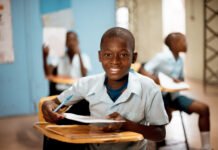

Kenya’s education system has undergone one of the most significant transformations in its history. The Competency-Based Curriculum (CBC) replaced the decades-old 8-4-4 system starting in 2017, reshaping how children across the country learn, are assessed, and prepare for adult life. Whether you are a parent enrolling your child in Grade 1, a teacher navigating the new framework, or a student trying to understand what lies ahead, this guide explains everything you need to know about the CBC curriculum in Kenya — clearly, accurately, and in full.
What Is CBC Curriculum in Kenya?
The Competency-Based Curriculum (CBC) is Kenya’s national education framework introduced by the Kenya Institute of Curriculum Development (KICD) in 2017 under the oversight of the Ministry of Education. Unlike the old 8-4-4 system, which focused primarily on memorising content and passing exams, CBC measures what learners can actually do with what they have learned. It emphasises skills, values, and practical abilities that prepare children for real-world challenges.



Under the KICD CBC framework, learning is organised around core competencies rather than rigid academic content alone. These include critical thinking, creativity, communication, collaboration, digital literacy, citizenship, and self-efficacy. Every subject, lesson, and activity is designed to help the learner develop these abilities progressively from as early as age four.
The policy shift was grounded in Kenya’s Vision 2030 and aligned with the United Nations Sustainable Development Goal 4 on Quality Education. The Kenya National Examinations Council (KNEC) plays a key role in developing standardised assessments at different transition points in the new system.
How the CBC Curriculum Works in Kenya
The CBC curriculum in Kenya is built around a structured pathway that takes a child from early childhood all the way through to higher education. Each stage builds on the previous one, ensuring that no child is left behind simply because they underperformed in a single high-stakes exam.
Assessment under CBC is continuous and formative. Teachers evaluate learners through observation, projects, portfolios, group work, and class participation — not just written tests. This approach gives a fuller picture of each child’s progress and allows educators to identify and support struggling learners much earlier.

The new education system in Kenya follows a 2-6-3-3-3 progression, replacing the old 8-4-4 model:
| Level | Stage | Duration | Age Range |
|---|---|---|---|
| Pre-Primary | PP1 – PP2 | 2 years | 4–5 years |
| Lower Primary | Grade 1–3 | 3 years | 6–8 years |
| Upper Primary | Grade 4–6 | 3 years | 9–11 years |
| Junior Secondary | Grade 7–9 | 3 years | 12–14 years |
| Senior Secondary | Grade 10–12 | 3 years | 15–17 years |
| Tertiary / University | Diploma / Degree | 2–4+ years | 18+ years |
This means two years of pre-primary, six years of primary (Grades 1–6), three years of junior secondary (Grades 7–9), three years of senior secondary (Grades 10–12), and three or more years of university or tertiary education.
Read also: CBC Subjects in Junior Secondary Kenya
Key Features and Structure of the KICD CBC Framework
The Seven Core Competencies
At the heart of the KICD CBC framework are seven core competencies every Kenyan learner is expected to develop:
- Communication and Collaboration — expressing ideas clearly and working well with others
- Critical Thinking and Problem Solving — analysing situations and finding workable solutions
- Creativity and Imagination — generating new ideas and thinking beyond conventional limits
- Citizenship — understanding rights, responsibilities, and community values
- Digital Literacy — using technology effectively and responsibly
- Learning to Learn — developing self-awareness and strong study habits
- Self-Efficacy — believing in one’s ability to succeed and taking personal initiative
CBC Subjects List in Kenya by Level
The subjects taught under CBC vary by stage. Here is a complete breakdown:
Pre-Primary (PP1–PP2): Mathematical Activities, Language Activities, Environmental Activities, Psychomotor and Creative Activities, Religious Education Activities.
Lower Primary (Grades 1–3): Literacy, Kiswahili, English, Mathematical Activities, Environmental Activities, Hygiene and Nutrition, Religious Education, Creative Arts, Physical and Health Education.
Upper Primary (Grades 4–6): English, Kiswahili, Mathematics, Integrated Science, Social Studies, Religious Education, Creative Arts, Physical and Health Education, Agriculture, Home Science.
Junior Secondary (Grades 7–9): English, Kiswahili, Mathematics, Integrated Science, Pre-Technical Studies, Social Studies, Business Studies, Agriculture, Home Science, Creative Arts and Sports, Religious Education, Life Skills Education.
Senior Secondary (Grades 10–12): Learners choose one of three specialised pathways — STEM (Science, Technology, Engineering and Mathematics), Social Sciences, or Arts and Sports Science. Each pathway has core and elective subjects tailored to the learner’s strengths and career ambitions.
KNEC Transition Assessments
KNEC administers standardised assessments at key transition points. The Grade 6 Assessment guides placement into junior secondary school. The Junior School Assessment (JSA) at the end of Grade 9 determines placement into a senior secondary pathway. The Senior School Assessment (SSA) at Grade 12 is the gateway to university and TVET colleges. These assessments replace KCPE and KCSE as the primary transition tools.
Learner Portfolios
Every student maintains a portfolio throughout their schooling — a collection of work samples, projects, and teacher observations. Portfolios serve as evidence of learning and are reviewed during assessments to show growth over time, not just performance on a single test day.
Benefits of the CBC Curriculum in Kenya
The shift to CBC brings genuine, long-term benefits for Kenyan learners, families, and the broader economy:
- Focuses on practical skills — children learn to apply knowledge in real life. A Grade 5 learner in Kisumu, for example, might design a small irrigation model as part of their Agriculture unit, gaining hands-on problem-solving experience.
- Reduces exam pressure — continuous assessment spreads evaluation across the school year, reducing the anxiety that came with a single exam determining a child’s entire future.
- Identifies talent early — because CBC assesses a wider range of abilities including arts, sports, and technology, children who do not excel in traditional academics still have clear pathways to succeed.
- Supports learners with special needs — CBC incorporates inclusive education principles, making it easier for teachers to adapt learning to children with disabilities or different learning speeds.
- Aligns with national development goals — the emphasis on STEM, digital literacy, and entrepreneurship directly supports Kenya’s Vision 2030 objective of building a knowledge-based economy.
- Strengthens parental involvement — CBC requires parents to participate in their child’s learning, from supporting home projects to signing off on portfolios, making education a shared family responsibility.
- Creates fairer transitions — placement into secondary school is no longer based solely on one exam, giving every learner a more equitable shot at progression.
Challenges Facing the CBC Curriculum in Kenya
A balanced look at the new education system in Kenya must honestly acknowledge the real challenges faced by schools, families, and the government:
- High cost of learning materials — CBC requires more project-based resources, increasing the financial burden on parents especially in low-income households. While the Ministry of Education has worked to supply some materials through approved channels, gaps remain significant in many schools.
- Teacher preparedness — many teachers, particularly in rural areas, received limited training before CBC reached their classrooms. Shifting from content-focused teaching to competency-based facilitation requires a deep mindset and skills change.
- Infrastructure gaps — schools in arid and semi-arid regions of northern Kenya often lack adequate classrooms, science laboratories, and digital equipment required for CBC activities.
- Portfolio management burden — maintaining individual learner portfolios for large class sizes of 50 to 80 pupils is demanding for teachers without dedicated administrative support.
- Parental confusion — many parents who went through 8-4-4 do not fully understand how CBC works, leading to anxiety and misinformation spreading widely on social media platforms.
- Junior Secondary transition friction — the movement of Grade 7 learners into secondary schools in 2023 created logistical challenges around classroom space, staffing, and resource allocation across the country.
- Urban-rural divide — schools in Nairobi and major cities generally adapted more quickly than rural schools, raising equity concerns about the consistency of CBC implementation nationwide.
Latest Updates on CBC in Kenya (2025–2026)
As of 2026, CBC implementation has reached a critical milestone. The first cohort of CBC learners who began Grade 1 in 2017 are now in Grade 9 — the final year of Junior Secondary School. This cohort is expected to sit the Junior School Assessment (JSA) administered by KNEC, which will determine their placement into one of the three senior secondary pathways.
The Ministry of Education has continued its phased rollout of senior secondary pathways, with pilot schools across all 47 counties receiving additional funding and specialised teacher training. In 2025, the government announced expanded capitation grants to public schools to help meet the costs of CBC materials and pathway-specific instructors.
KICD has been developing digital learning resources accessible through the Kenya Education Cloud (KEC), aimed at supporting teachers and learners in underserved areas. Mobile-based learning applications aligned to CBC are being piloted in partnership with telecommunications providers to extend reach into areas with limited physical infrastructure.
In 2024, Parliament’s Education Committee reviewed CBC implementation and recommended faster training for untrained teachers, improved infrastructure funding, and a revision of portfolio assessment guidelines to reduce the administrative burden on classroom teachers.
Who Should Care About the CBC Curriculum in Kenya?
- Parents of children aged 4–17 — understanding CBC helps you support your child’s learning at home and engage meaningfully with their portfolios and projects.
- Primary and secondary school teachers — knowing the KICD CBC framework helps educators plan lessons correctly, assess learners fairly, and meet the new competency benchmarks.
- School administrators and head teachers — CBC requires restructuring timetables, managing specialist teachers, and maintaining proper assessment records across all grades.
- University and TVET admissions offices — senior secondary pathways and JSA/SSA results will shape future admissions criteria, and institutions must adapt accordingly.
- Policy makers and education researchers — CBC data on learner outcomes, teacher performance, and regional disparities is essential for shaping future education budgets and reforms.
- Employers and industry leaders — Kenya’s future workforce will be shaped by CBC values of creativity, collaboration, and digital literacy. Understanding this helps businesses plan their talent pipelines now.
Frequently Asked Questions About CBC Curriculum in Kenya
What is the difference between CBC and 8-4-4 in Kenya?
The 8-4-4 system focused heavily on academic content and high-stakes examinations — KCPE and KCSE — as the primary measure of a learner’s progress. The CBC curriculum replaces this with a competency-based approach that emphasises practical skills, values, and continuous assessment through portfolios and teacher observation. The structural progression also changed from 8-4-4 to the new 2-6-3-3-3 model.
Which body developed the CBC curriculum in Kenya?
The Kenya Institute of Curriculum Development (KICD), a state corporation under the Ministry of Education, developed and continues to review the CBC curriculum. KICD works closely with KNEC for assessments and with the Ministry of Education for overall policy direction and implementation guidelines.
What are the CBC levels in Kenya?
The CBC levels in Kenya are Pre-Primary (PP1–PP2), Lower Primary (Grades 1–3), Upper Primary (Grades 4–6), Junior Secondary School (Grades 7–9), Senior Secondary School (Grades 10–12), and Tertiary or University education. Each level is designed to build progressively on the competencies developed at the previous stage.
What subjects are taught under CBC in Kenya?
The CBC subjects list in Kenya varies by level. At lower primary, core subjects include Literacy, Kiswahili, English, Mathematics, and Environmental Activities. At junior secondary, learners study English, Kiswahili, Mathematics, Integrated Science, Pre-Technical Studies, Business Studies, Agriculture, and Creative Arts among others. At senior secondary, learners choose one of three specialised pathways — STEM, Social Sciences, or Arts and Sports Science.
Is CBC mandatory for all schools in Kenya?
Yes. The CBC curriculum is mandatory for all public schools and approved private schools in Kenya. It is regulated by the Ministry of Education and all schools must adhere to KICD-approved curriculum frameworks, learning outcomes, and assessment guidelines at every stage.
How does CBC assess learners without relying solely on exams?
CBC uses a combination of Continuous Assessment Tests (CATs), learner portfolios, teacher observations, group projects, and standardised KNEC assessments at key transition points. This multi-dimensional approach means a child’s progress is tracked consistently throughout the year rather than being judged on a single exam performance.
What happens after Grade 9 under the CBC system?
After completing Grade 9, learners sit the Junior School Assessment (JSA) conducted by KNEC. Based on their results and stated interests, they are placed into one of three senior secondary pathways — STEM, Social Sciences, or Arts and Sports Science. Senior secondary runs from Grades 10 to 12, after which learners can pursue university, TVET colleges, or other approved tertiary programmes.
Final Summary
The CBC curriculum in Kenya represents a fundamental rethinking of education — moving away from rote learning and single-exam assessment toward a system that values what learners can actually do, not just what they can recall under pressure. Developed by KICD and supported by KNEC and the Ministry of Education, the new education system in Kenya follows a clear 2-6-3-3-3 pathway covering pre-primary through senior secondary school.
The KICD CBC framework is built around seven core competencies and introduces a broad CBC subjects list that expands learner choice and relevance at every level. While challenges around cost, teacher training, and infrastructure remain real and ongoing, the long-term vision of producing skilled, creative, and digitally literate Kenyan citizens is firmly aligned with the country’s Vision 2030 development goals.
For parents, the key takeaway is to engage actively with your child’s portfolio and support home-based learning projects. For teachers, mastering continuous assessment and competency-based lesson planning is the foundation of effective CBC delivery. For students, success under CBC comes from consistent effort, curiosity, and building practical skills — not just cramming for one big exam.