 TIMEBUCKS
Low minimum
payout of just
$3 — start
earning today!
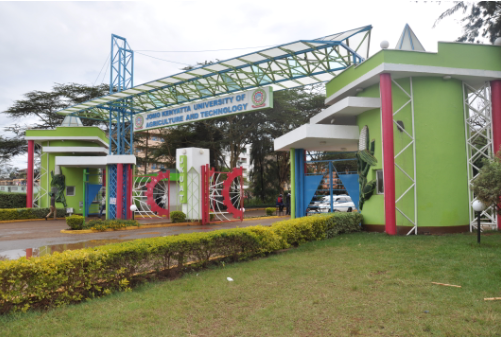
Jomo Kenyatta University of Agriculture and Technology — widely known as JKUAT — is one of Kenya’s most prestigious public universities and a leading institution in science, technology, engineering, and agriculture across the African continent. Named after Kenya’s founding father Mzee Jomo Kenyatta, the university has grown from a humble middle-level college into a fully-fledged, internationally recognised research university with campuses spread across Kenya and a satellite campus in Kigali, Rwanda.
For students considering joining JKUAT, one of the first questions is: what courses does JKUAT offer, and how much does it cost to study there? This guide answers both questions comprehensively. We cover the full JKUAT courses list across all colleges and faculties, the JKUAT fee structure for both government-sponsored and self-sponsored students, JKUAT admission requirements, and everything else you need to know to apply and enrol in 2026.



About JKUAT: A Quick Overview
Full Name: Jomo Kenyatta University of Agriculture and Technology
Website: www.jkuat.ac.ke
Main Campus: Juja, Kiambu County (along Nairobi–Thika Superhighway)
Charter Status: Fully Chartered
Type: Public University
Regulator: Commission for University Education (CUE)
Placement: Through KUCCPS for government-sponsored students
JKUAT was established as a constituent college of the University of Nairobi in 1981, elevated to a full university in 1994, and granted a charter in 1994 under the Universities Act. Today it enrolls tens of thousands of students across its main campus in Juja, constituent campuses in Nairobi CBD, Karen, Mombasa, Kisii, and Nakuru, and its international campus in Kigali, Rwanda.
The university is structured around several colleges and faculties, each housing multiple schools and departments that offer programmes from certificate and diploma level through to undergraduate, postgraduate, and doctoral degrees.
TIMEBUCKS
Low minimum
payout of just
$3 — start
earning today!
JKUAT Admission Requirements
Before exploring the JKUAT courses list, it is important to understand the entry requirements. JKUAT’s admission requirements vary by programme level and specific course, but the following are the standard thresholds that apply across most programmes.

Minimum KCSE Requirements for JKUAT
| Programme Level | Minimum KCSE Grade | Additional Requirements |
|---|---|---|
| Bachelor’s Degree (Government-Sponsored) | C+ (plus) | Specific cluster subjects depending on programme |
| Bachelor’s Degree (Self-Sponsored) | C+ (plus) | Specific cluster subjects depending on programme |
| Diploma | C (plain) | Relevant subject performance |
| Certificate | D+ (plus) | Relevant subject performance |
| Postgraduate (Masters) | Bachelor’s Degree (Second Class Honours or above) | Relevant undergraduate degree |
| PhD | Master’s Degree (relevant field) | Research proposal |
JKUAT Cluster Subjects by Faculty
JKUAT uses the KUCCPS cluster points system for government-sponsored admission into degree programmes. The cluster subjects vary by faculty:
- Engineering and Technology — Mathematics, Physics, Chemistry, Biology/Geography
- Agriculture — Biology, Chemistry, Mathematics/Physics, Agriculture/Geography
- Science — Mathematics, Biology, Chemistry, Physics
- Computing and ICT — Mathematics, Physics, Chemistry, English/Kiswahili
- Architecture and Built Environment — Mathematics, Physics, Geography, Art and Design
- Business and Commerce — Mathematics, English/Kiswahili, two best other subjects
- Education (Science) — Mathematics, Physics/Chemistry/Biology, English, one other
- Health Sciences — Biology, Chemistry, Mathematics/Physics, English
Application Routes
- Government-Sponsored Students: Apply through the KUCCPS Student Portal during the annual application window after KCSE results
- Self-Sponsored Students (Module II): Apply directly through the JKUAT admissions portal or visit the admissions office at any campus
- Postgraduate Students: Apply directly through the JKUAT School of Graduate Studies via www.jkuat.ac.ke
JKUAT Courses List: All Programmes Offered at JKUAT
JKUAT is organised into several colleges and faculties. Below is a comprehensive list of programmes offered at JKUAT across all its key colleges.
College of Engineering and Technology (CoETEC)
JKUAT’s College of Engineering and Technology is the flagship faculty of the university and among the best engineering schools in East Africa. It offers some of the most competitive engineering programmes in Kenya, attracting the highest-scoring KCSE candidates in sciences every year.
Undergraduate Programmes:
- Bachelor of Science in Civil Engineering
- Bachelor of Science in Mechanical Engineering
- Bachelor of Science in Electrical and Electronic Engineering
- Bachelor of Science in Mechatronics Engineering
- Bachelor of Science in Chemical Engineering
- Bachelor of Science in Environmental Engineering
- Bachelor of Science in Aerospace Engineering
- Bachelor of Science in Industrial Engineering
- Bachelor of Science in Agricultural Engineering
- Bachelor of Science in Manufacturing Engineering and Technology
- Bachelor of Technology (BTech) — Engineering
Postgraduate Programmes:
- Master of Science in Civil Engineering (various specialisations)
- Master of Science in Mechanical Engineering
- Master of Science in Electrical Engineering
- Master of Science in Mechatronics Engineering
- PhD in Engineering (various disciplines)
College of Agriculture and Natural Resources (CANR)
Agriculture is one of JKUAT’s founding disciplines. The College of Agriculture and Natural Resources offers applied programmes that address Kenya’s food security, environmental sustainability, and rural development challenges directly.
Undergraduate Programmes:
- Bachelor of Science in Agriculture
- Bachelor of Science in Food Science and Technology
- Bachelor of Science in Horticulture
- Bachelor of Science in Agribusiness Management
- Bachelor of Science in Natural Resources Management
- Bachelor of Science in Agricultural Biotechnology
- Bachelor of Science in Soil Science
- Bachelor of Science in Animal Science
- Bachelor of Science in Environmental Science
Postgraduate Programmes:
- Master of Science in Agronomy
- Master of Science in Food Science and Technology
- Master of Science in Horticulture
- Master of Science in Agricultural Economics
- Master of Science in Environmental Science
- PhD in Agriculture and related fields
College of Human Resource Development (COHRED)
COHRED houses JKUAT’s business, education, and social science programmes. Despite being less prominent than engineering in the public imagination, COHRED is one of the most active and largest colleges at JKUAT by student enrolment.
Business and Commerce Programmes:
- Bachelor of Commerce (BCom) — Accounting, Finance, Marketing, Human Resource Management
- Bachelor of Business Administration (BBA)
- Bachelor of Science in Entrepreneurship
- Bachelor of Science in Supply Chain Management
- Bachelor of Science in Procurement and Contract Management
- Bachelor of Economics
- Bachelor of Human Resource Management
Education Programmes:
- Bachelor of Education (Science) — Mathematics, Physics, Chemistry, Biology combinations
- Bachelor of Education (Arts) — English, History, Geography, CRE combinations
- Bachelor of Science in Education (Technology Education)
- Postgraduate Diploma in Education (PGDE)
Postgraduate Business and Education Programmes:
- Master of Business Administration (MBA)
- Master of Science in Human Resource Management
- Master of Science in Supply Chain Management
- Master of Education
- PhD in Business Administration
- PhD in Education
College of Pure and Applied Sciences (COPAS)
COPAS is home to JKUAT’s core science programmes, training students in fundamental and applied sciences that feed into research, industry, and further academic study.
Undergraduate Programmes:
- Bachelor of Science in Chemistry
- Bachelor of Science in Physics
- Bachelor of Science in Mathematics and Computer Science
- Bachelor of Science in Statistics and Actuarial Science
- Bachelor of Science in Biochemistry
- Bachelor of Science in Microbiology
- Bachelor of Science in Botany
- Bachelor of Science in Zoology
- Bachelor of Science in Applied Biology
Postgraduate Programmes:
- Master of Science in Chemistry
- Master of Science in Physics
- Master of Science in Mathematics
- Master of Science in Statistics
- Master of Science in Biochemistry
- Master of Science in Microbiology
- PhD in Pure and Applied Sciences (various disciplines)
College of Health Sciences (CHS)
JKUAT’s College of Health Sciences has grown significantly in recent years, offering clinical and health sciences programmes that address Kenya’s critical health workforce needs.
Undergraduate Programmes:
- Bachelor of Medicine and Bachelor of Surgery (MBChB) — 6 years
- Bachelor of Science in Nursing
- Bachelor of Science in Medical Laboratory Sciences
- Bachelor of Science in Public Health
- Bachelor of Science in Pharmacy
- Bachelor of Science in Clinical Medicine
- Bachelor of Science in Nutritional Sciences
- Bachelor of Science in Biomedical Science
- Bachelor of Science in Physiotherapy
- Bachelor of Science in Optometry
Postgraduate Programmes:
- Master of Science in Public Health
- Master of Science in Epidemiology
- Master of Science in Clinical Medicine
- Master of Science in Nutrition
- PhD in Health Sciences
School of Architecture and Building Sciences (SABS)
JKUAT’s School of Architecture and Building Sciences is one of Kenya’s leading institutions for architecture, construction, and built environment programmes.
Undergraduate Programmes:
- Bachelor of Architecture
- Bachelor of Science in Construction Management
- Bachelor of Science in Building Economics and Quantity Surveying
- Bachelor of Science in Urban and Regional Planning
- Bachelor of Science in Geospatial Engineering
Postgraduate Programmes:
- Master of Architecture
- Master of Science in Construction Management
- Master of Science in Urban and Regional Planning
- PhD in Architecture and Built Environment
School of Computing and Information Technology (SCIT)
The School of Computing and Information Technology is one of JKUAT’s fastest-growing faculties, reflecting Kenya’s growing technology economy and the global demand for ICT professionals.
Undergraduate Programmes:
- Bachelor of Science in Computer Science
- Bachelor of Science in Information Technology
- Bachelor of Science in Software Engineering
- Bachelor of Science in Information Systems Security
- Bachelor of Science in Business Information Technology (BBIT)
- Bachelor of Science in Computer Networks and Systems Administration
- Bachelor of Science in Data Science and Analytics
Postgraduate Programmes:
- Master of Science in Computer Science
- Master of Science in Information Technology
- Master of Science in Information Systems Security
- Master of Science in Data Science
- PhD in Computer Science and Information Technology
School of Law (SOL)
JKUAT’s School of Law offers the LLB degree and is one of the newer law schools in Kenya, providing an increasingly popular alternative to the established law faculties at UoN and Strathmore.
Undergraduate Programmes:
- Bachelor of Laws (LLB) — 4 years
Postgraduate Programmes:
- Master of Laws (LLM)
- PhD in Law
JKUAT Fee Structure 2026
JKUAT’s fee structure differs significantly between government-sponsored students (placed through KUCCPS) and self-sponsored students (Module II). Below are estimated fee ranges for the most popular programmes.
Government-Sponsored Students (KUCCPS Placed)
Government-sponsored students at JKUAT pay heavily subsidised tuition. The fees below are approximate annual figures for government-sponsored students:
| Programme Category | Estimated Annual Tuition (Govt-Sponsored) |
|---|---|
| Engineering Programmes | Ksh 24,000 – 48,000 |
| Science Programmes | Ksh 16,000 – 40,000 |
| Agriculture Programmes | Ksh 16,000 – 36,000 |
| Health Sciences (Nursing, Pharmacy, Medical Lab) | Ksh 20,000 – 48,000 |
| MBChB (Medicine) | Ksh 48,000 – 72,000 |
| Business and Commerce | Ksh 16,000 – 36,000 |
| Education | Ksh 16,000 – 32,000 |
| Computing and IT | Ksh 20,000 – 40,000 |
| Architecture | Ksh 24,000 – 48,000 |
| Law | Ksh 20,000 – 40,000 |
Self-Sponsored Students (Module II)
Self-sponsored students pay considerably higher fees. Figures below are approximate annual tuition estimates:
| Programme Category | Estimated Annual Tuition (Self-Sponsored) |
|---|---|
| Engineering Programmes | Ksh 150,000 – 280,000 |
| Science Programmes | Ksh 100,000 – 200,000 |
| Agriculture Programmes | Ksh 90,000 – 170,000 |
| Health Sciences | Ksh 140,000 – 260,000 |
| MBChB (Medicine) | Ksh 350,000 – 550,000 |
| Business and Commerce | Ksh 80,000 – 160,000 |
| Education | Ksh 80,000 – 150,000 |
| Computing and IT | Ksh 100,000 – 180,000 |
| Architecture | Ksh 140,000 – 220,000 |
| Law | Ksh 120,000 – 200,000 |
Accommodation and Other Costs at JKUAT
- On-campus hostel accommodation: Approximately Ksh 15,000 – 30,000 per semester depending on room type
- Meals (if using campus dining): Approximately Ksh 15,000 – 25,000 per semester
- Registration and activity fees: Approximately Ksh 5,000 – 15,000 per year
- Medical cover: Ksh 1,500 – 3,000 per year (student health scheme)
HELB Financial Support for JKUAT Students
Students enrolled at JKUAT — both government-sponsored and self-sponsored — are eligible to apply for financial support from the Higher Education Loans Board (HELB). HELB offers upkeep loans, tuition loans, and bursaries for students from low-income households. Apply through the HELB portal after receiving your admission letter.
JKUAT Campuses in Kenya and Beyond
One of JKUAT’s significant strengths is its multi-campus model, which brings university education closer to students across different regions of Kenya:
| Campus | Location | Key Programmes |
|---|---|---|
| Main Campus | Juja, Kiambu County | All programmes — engineering, science, agriculture, health, business, law |
| Nairobi CBD Campus | Tom Mboya Street, Nairobi | Business, computing, education (evening and weekend programmes) |
| Karen Campus | Karen, Nairobi | Business, computing, education |
| Westlands Campus | Westlands, Nairobi | Business, law, computing |
| Kisii Campus | Kisii County | Business, education, computing |
| Nakuru Campus | Nakuru County | Business, education, agriculture |
| Mombasa Campus | Mombasa County | Business, computing, engineering technology |
| Kigali Campus | Kigali, Rwanda | Engineering, business, computing (international students) |
Why Choose JKUAT?
There are several compelling reasons why thousands of students choose JKUAT every year:
- National and International Rankings — JKUAT regularly appears in continental university rankings and is recognised by international bodies for its engineering, science, and technology programmes
- Industry Connections — JKUAT’s proximity to Kenya’s industrial corridor along the Nairobi–Thika Superhighway — home to major manufacturers, tech firms, and agribusinesses — creates strong internship and graduate placement opportunities
- Research Output — JKUAT is one of Kenya’s top research universities, with active research centres in engineering, biotechnology, ICT, and agriculture that provide students with hands-on research experience
- Multi-Campus Accessibility — With campuses across Kenya and in Rwanda, JKUAT is one of the most geographically accessible universities in the region
- Programme Breadth — From medicine and law to aerospace engineering and data science, JKUAT offers one of the most diverse programme portfolios of any Kenyan public university
- Affordable Government-Sponsored Fees — For students placed through KUCCPS, JKUAT offers world-class education at heavily subsidised cost
Frequently Asked Questions About JKUAT
1. What is the minimum grade for admission to JKUAT?
The minimum KCSE grade for government-sponsored degree admission at JKUAT is C+ (plus) overall, with additional cluster subject requirements depending on the specific programme. Engineering and health sciences programmes typically require higher cluster points. Diploma programmes require a minimum of C (plain) and certificate programmes require D+ (plus).
2. How do I apply for a government-sponsored place at JKUAT?
Government-sponsored applicants must apply through the KUCCPS Student Portal during the annual application window, which opens after KCSE results are released. Log in using your KCSE index number, examination year, and date of birth, then select JKUAT programmes as part of your up to six programme choices.
3. Does JKUAT offer self-sponsored (Module II) programmes?
Yes. JKUAT accepts self-sponsored students through its Module II programme for students who did not secure a government-sponsored slot through KUCCPS, or who wish to enrol outside the regular intake. Self-sponsored students apply directly through the JKUAT admissions portal and pay higher tuition fees than government-sponsored students.
4. Can I get a HELB loan to study at JKUAT?
Yes. JKUAT is a fully chartered public university and all enrolled students — government-sponsored and self-sponsored — are eligible to apply for HELB loans and bursaries. Apply through the HELB portal after receiving your admission letter.
5. Does JKUAT have a medical school?
Yes. JKUAT’s College of Health Sciences offers the Bachelor of Medicine and Bachelor of Surgery (MBChB), which is a six-year programme. JKUAT also offers related health sciences programmes including nursing, pharmacy, medical laboratory sciences, physiotherapy, and public health. The medical programmes are accredited by the relevant Kenyan health professional bodies.
6. What is JKUAT known for academically?
JKUAT is best known for its engineering, technology, and applied science programmes — particularly civil, mechanical, electrical, mechatronics, and aerospace engineering. It is also one of Kenya’s leading institutions for agriculture, food science, ICT, and architecture. The university’s growing health sciences faculty and school of law have added significant breadth to its academic portfolio in recent years.
7. Where is JKUAT’s main campus located?
JKUAT’s main campus is located in Juja, Kiambu County, approximately 36 kilometres northeast of Nairobi along the Nairobi–Thika Superhighway. The campus is easily accessible by public transport from Nairobi and Thika. JKUAT also has satellite campuses in Nairobi CBD, Karen, Westlands, Kisii, Nakuru, Mombasa, and Kigali, Rwanda.
Conclusion: Is JKUAT the Right University for You?
JKUAT is one of Kenya’s finest public universities — a place where academic rigour meets practical, industry-relevant training across a remarkable range of disciplines. If you are passionate about engineering, science, technology, agriculture, health sciences, computing, or architecture, JKUAT offers some of the best programmes in East Africa, taught by experienced faculty in well-resourced facilities.
For government-sponsored students placed through KUCCPS, JKUAT offers outstanding value — world-class education at heavily subsidised fees, in a campus environment designed to produce graduates who are genuinely work-ready and research-capable. For self-sponsored students, the fees are higher, but the quality, reputation, and career outcomes justify the investment.
Start by verifying your cluster points against your programme of interest on the KUCCPS portal, confirm the latest fee structure directly with JKUAT’s admissions office, and apply for HELB financial support as soon as your admission is confirmed. The path to one of Kenya’s most respected degrees begins with a single, well-informed step.
Read also:
- University of Nairobi Courses and Fees 2026: The Complete Guide
- Universities Offering Law Courses in Kenya: Complete 2026 Guide
- Universities Offering Education Courses in Kenya: Complete 2026 Guide
- Universities Offering IT Courses in Kenya: Complete 2026 Guide
TIMEBUCKS
Low minimum
payout of just
$3 — start
earning today!